Mango Mousse Cake
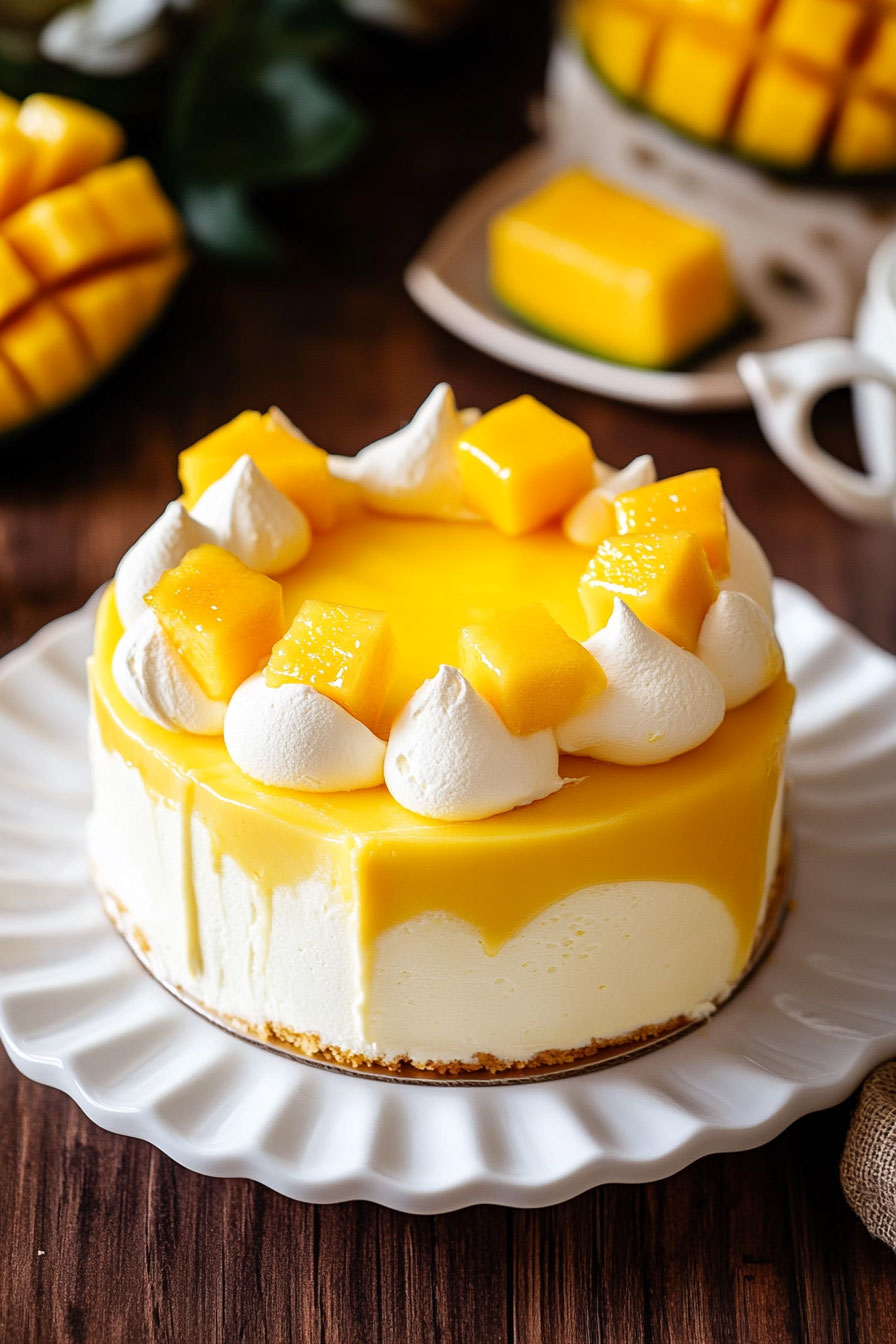
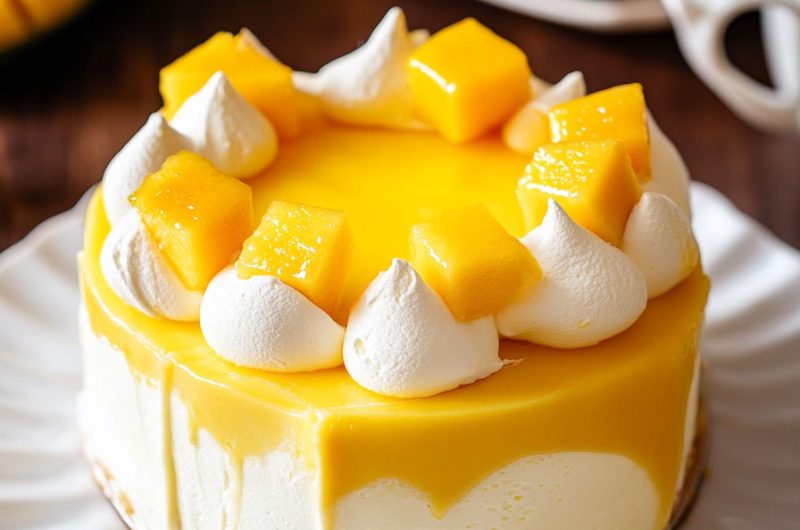
Oh wow, this Mango Mousse Cake is so bright and pretty. I saw the golden top and just had to taste it. One bite, and I was smiling.
I mix soft sponge cake with creamy mango mousse, and oh my, it’s dreamy. The mango is sweet and fresh. It feels light but still rich, and I love that.
When I cut a slice, the layers look so smooth and shiny. It tastes cool and creamy, like a little tropical treat. I always want one more bite, you know?
So if you love mango like I do, you have to try this cake. It looks fancy but is easier than it seems. Let’s make this Mango Mousse Cake together.
Why You’ll Love This Mango Mousse Cake Recipe
- Tropical Flavor: Mangoes bring a sweet, vibrant, and slightly tangy flavor to every layer of this cake.
- Light and Fluffy: The combination of mousse and sponge cake creates a cake that’s not too heavy, but still indulgent.
- Perfect for Celebrations: Whether it’s a birthday, a festive occasion, or just a treat to brighten up your day, this cake is perfect for all.
- No-Bake Mousse: The mango mousse itself requires no baking, making it easy and stress-free to prepare.
- Great for Make-Ahead: You can prepare the cake in stages, allowing it to chill and set before serving.
Required Kitchen Tools
Before diving into the recipe, let’s check what you’ll need to get started:
- Springform Cake Pan (8-inch) – A non-stick springform pan works best for removing the mousse cake easily.
- Electric Hand Mixer or Stand Mixer – To whip the egg whites and cream to perfect fluffiness.
- Whisk – A good quality whisk is essential for combining the dry ingredients for the cake base.
- Gelatin Powder – This is used to set the mango mousse and jelly layers.
- Mixing Bowls – You’ll need at least three large mixing bowls to separate the cake batter, mousse, and jelly.
- Measuring Cups & Spoons – Accurate measurements ensure the recipe turns out just right.
Ingredients for Mango Mousse Cake
For the Cake Layer:
- Egg Whites (3) – The egg whites are whipped to create a light and airy sponge.
- Cream of Tartar (1⁄4 teaspoon) – This stabilizes the egg whites to achieve the perfect texture.
- Granulated Sugar (60 g) – Helps in whipping the egg whites to soft peaks.
- Egg Yolks (3) – Provides richness to the cake batter.
- Granulated Sugar (60 g) – For the egg yolks, to create a smooth batter.
- Vanilla Extract (2 teaspoons) – Adds flavor to the cake.
- Vegetable Oil (40 ml) – Keeps the cake moist.
- Cold Water (50 ml) – Helps combine the ingredients for the cake.
- Plain Flour (100 g) – Forms the base of the cake.
- Baking Powder (1⁄2 teaspoon) – Leavens the cake, making it soft and airy.
- Salt (1⁄8 teaspoon) – A tiny amount helps balance the flavors in the cake.
For the Mango Mousse:
- Gelatin Powder (8 g) – This will help the mousse set and stay firm.
- Cold Water (2 tablespoons) – Helps dissolve the gelatin.
- Mangoes (400 g) – Fresh or frozen, the mangoes provide the essential flavor.
- Water (150 ml) – To blend the mangoes and create the puree.
- Granulated Sugar (120 g) – Adds sweetness to the mousse.
- Double Cream (400 ml) – Gives the mousse its creamy texture.
- Vanilla Extract (2 teaspoons) – Enhances the flavor of the mangoes and cream.
For the Mango Jelly:
- Gelatin Powder (4 g) – To give the jelly its firm texture.
- Cold Water (1 tablespoon) – To dissolve the gelatin.
- Mangoes (200 g) – Fresh mangoes for the jelly layer.
- Water (100 ml) – Used to blend the mangoes into puree for the jelly.
- Granulated Sugar (50 g) – Sweetens the jelly.
Step-by-Step Instructions to Make Mango Mousse Cake
1. Preparing the Cake Layer
Whisk the Egg Whites:
Start by preheating your oven to 350°F (175°C). In a mixing bowl, combine the egg whites and cream of tartar. Using an electric hand mixer or stand mixer, whip the egg whites until soft peaks form. Gradually add the 60 grams of sugar and continue whipping until stiff peaks form.
Whisk the Egg Yolks and Sugar:
In another bowl, whisk together the egg yolks and the remaining 60 grams of sugar until smooth and pale. Add the vanilla extract, vegetable oil, and cold water, and continue whisking until fully incorporated.
Combine Dry Ingredients:
In a separate bowl, sift together the plain flour, baking powder, and salt.
Fold in the Ingredients:
Slowly fold the dry ingredients into the egg yolk mixture, taking care not to deflate the batter. Then, gently fold the whipped egg whites into the batter in three additions. This will ensure a light and airy sponge.
Bake the Cake:
Pour the batter into an 8-inch springform cake pan lined with parchment paper. Bake for about 20-25 minutes, or until a toothpick inserted into the center comes out clean. Allow the cake to cool in the pan for 10 minutes, then remove it and let it cool completely on a wire rack.
2. Preparing the Mango Mousse
Dissolve the Gelatin:
In a small bowl, dissolve the gelatin powder in 2 tablespoons of cold water. Let it bloom for about 5 minutes. After blooming, heat the mixture gently in the microwave for 20-30 seconds until fully dissolved. Set aside.
Prepare the Mango Puree:
In a blender, combine the 400 grams of mangoes and 150 ml of water. Blend until smooth and creamy. Taste the puree and adjust sweetness with sugar if necessary.
Whip the Double Cream:
In a large mixing bowl, whip the double cream and vanilla extract together until soft peaks form.
Combine Mango Puree and Cream:
Once the cream is whipped, fold in the mango puree and the dissolved gelatin. Mix gently to combine, ensuring the mousse is smooth and creamy.
Chill the Mousse:
Pour the mango mousse over the cooled sponge cake layer, smoothing it out with a spatula. Place the cake in the fridge to set for at least 3 hours or until the mousse has firmed up.
3. Preparing the Mango Jelly
Dissolve the Gelatin for the Jelly:
Like the mousse, dissolve the gelatin powder for the jelly in 1 tablespoon of cold water. Let it bloom for 5 minutes, then microwave until dissolved. Set aside.
Prepare Mango Puree for Jelly:
Blend the 200 grams of mangoes and 100 ml of water to make a smooth puree. Add 50 grams of sugar to the puree and stir until dissolved.
Combine Gelatin and Mango Puree:
Once the gelatin has dissolved, mix it with the mango puree. Allow the jelly mixture to cool slightly, but don’t let it set.
Top the Cake with Mango Jelly:
Pour the mango jelly over the set mousse layer. Carefully spread it evenly with a spatula. Return the cake to the fridge to chill for an additional 2 hours, allowing the jelly to firm up completely.
4. Assembling and Decorating the Cake
Once the jelly layer has set, carefully remove the sides of the springform pan. If desired, decorate the top with fresh mango slices, mint leaves, or a drizzle of extra mango puree for a tropical touch.
How to Serve Mango Mousse Cake
- Chilled & Ready to Serve: Mango Mousse Cake is best served chilled. It’s perfect for a warm weather treat or to bring tropical vibes to your party.
- With Coffee or Tea: The sweetness of the mango mousse pairs perfectly with a cup of coffee or tea for a refined dessert experience.
- For Special Occasions: The vibrant layers and striking mango jelly make this cake a showstopper for birthdays, weddings, or any festive gathering.
Storing Mango Mousse Cake
- Fridge Storage: Since this cake contains mousse and jelly, it needs to be stored in the refrigerator. Keep it in an airtight container or cover it with plastic wrap. It will stay fresh for up to 3 days.
- Freezing the Cake: While freezing is possible, the texture of the mousse and jelly may change slightly. To freeze, place the cake in an airtight container or wrap it tightly with plastic wrap and foil. Defrost it in the fridge overnight before serving.
Nutrition Information
| Component | Amount |
|---|---|
| Calories | 320 kcal |
| Total Fat | 18 g |
| Saturated Fat | 10 g |
| Cholesterol | 90 mg |
| Sodium | 90 mg |
| Total Carbohydrates | 36 g |
| Dietary Fiber | 2 g |
| Sugars | 25 g |
| Protein | 4 g |
Conclusion
Mango Mousse Cake is a visually stunning and delectable dessert that delivers the tropical flavors of fresh mangoes in every bite. Whether you’re preparing it for a special occasion or simply treating yourself, this cake is sure to impress. With its light sponge cake base, creamy mango mousse, and vibrant mango jelly, it’s a true showstopper. The best part is that it’s relatively easy to make and can be prepared ahead of time, making it a hassle-free dessert for your next event.
Mango Mousse Cake
Course: Uncategorized8-10
servings40
minutes20
minutes320
kcal5+
hoursIngredients
- Sponge Cake Layer
3 egg whites
¼ tsp cream of tartar
60 g granulated sugar
3 egg yolks
60 g granulated sugar
2 tsp vanilla extract
40 ml vegetable oil
50 ml cold water
100 g plain flour
½ tsp baking powder
⅛ tsp salt
- Mango Mousse
8 g gelatin powder
2 tbsp cold water
400 g mangoes (fresh or thawed frozen)
150 ml water
120 g granulated sugar
400 ml double cream
2 tsp vanilla extract
- Mango Jelly Topping
4 g gelatin powder
1 tbsp cold water
200 g mangoes
100 ml water
50 g granulated sugar
Directions
- Make the Sponge Cake
Preheat oven to 350°F (175°C). Line an 8-inch springform pan.
Whip egg whites with cream of tartar until soft peaks form. Gradually add sugar and whip to stiff peaks.
In another bowl, whisk egg yolks with sugar until pale. Add vanilla, oil, and water.
Sift flour, baking powder, and salt into yolk mixture. Mix gently.
Fold whipped egg whites into batter in three additions.
Pour into pan and bake 20–25 minutes. Cool completely. - Make the Mango Mousse
Bloom gelatin in cold water for 5 minutes. Microwave until dissolved.
Blend mangoes with water and sugar until smooth.
Whip double cream with vanilla to soft peaks.
Fold mango puree and dissolved gelatin into whipped cream.
Pour mousse over cooled sponge. Chill 3 hours or until set. - Make the Mango Jelly
Bloom gelatin in cold water. Heat until dissolved.
Blend mangoes, water, and sugar until smooth.
Stir gelatin into mango puree. Cool slightly.
Pour gently over set mousse layer.
Chill 2 more hours until firm.
Mango Mousse Cake FAQs
Can I use frozen mangoes instead of fresh?
Yes, frozen mangoes work great! Just make sure to thaw them before making the puree.
Can I make this cake without gelatin?
Gelatin helps the mousse and jelly set properly. You can try using agar-agar as a substitute if you prefer a vegetarian option, but the texture may vary slightly.
How do I know if my mousse is set?
The mousse should be firm and hold its shape when you cut into it. If it’s still soft and runny, it needs more time to chill.